
Helping Avy validate a new product before building it – with an AI-native prototype in four weeks

Case
2025 – 2026
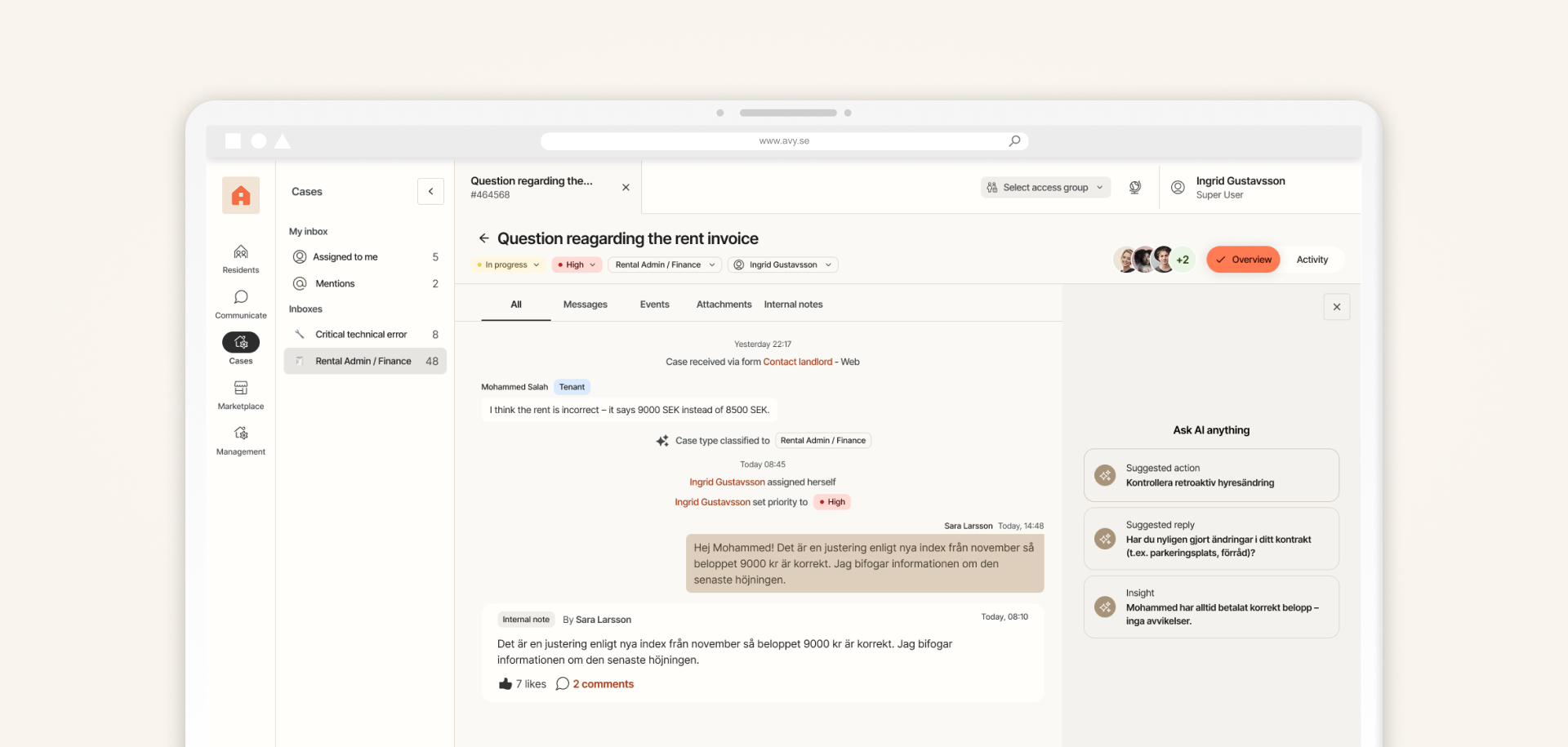
Avy wanted to expand from a resident app into a case management platform for housing company staff, in a crowded market. I turned customer interviews and a feature list into a structured system, designed AI into the core workflows, and built a working prototype in Lovable in about four weeks. Customers responded positively, Avy decided to build the product, and it has since launched as Avy Tenant Management. Role: Lead Product Designer · Team: CPO, PM and me · Timeline: Nov 2025 – Feb 2026 · Tools: Figma, Lovable
Research & Discovery
Product & UI Design
AI Prototyping & Validation
Avy had to know whether existing customers would switch – and pay – before investing in a new product. Its platform was built for residents; the next step was a case management system for the people working at housing companies. That market is crowded, and staff already juggle several systems for cases, customer data and communication.
My starting point was thin, as most briefs are: insights from customer interviews run by the CPO and PM, a list of needs and requested features, and a high-level roadmap. The task was to turn this into a user-friendly, forward-looking platform with AI built into the workflows – not sprinkled on top – and make it testable with real customers.
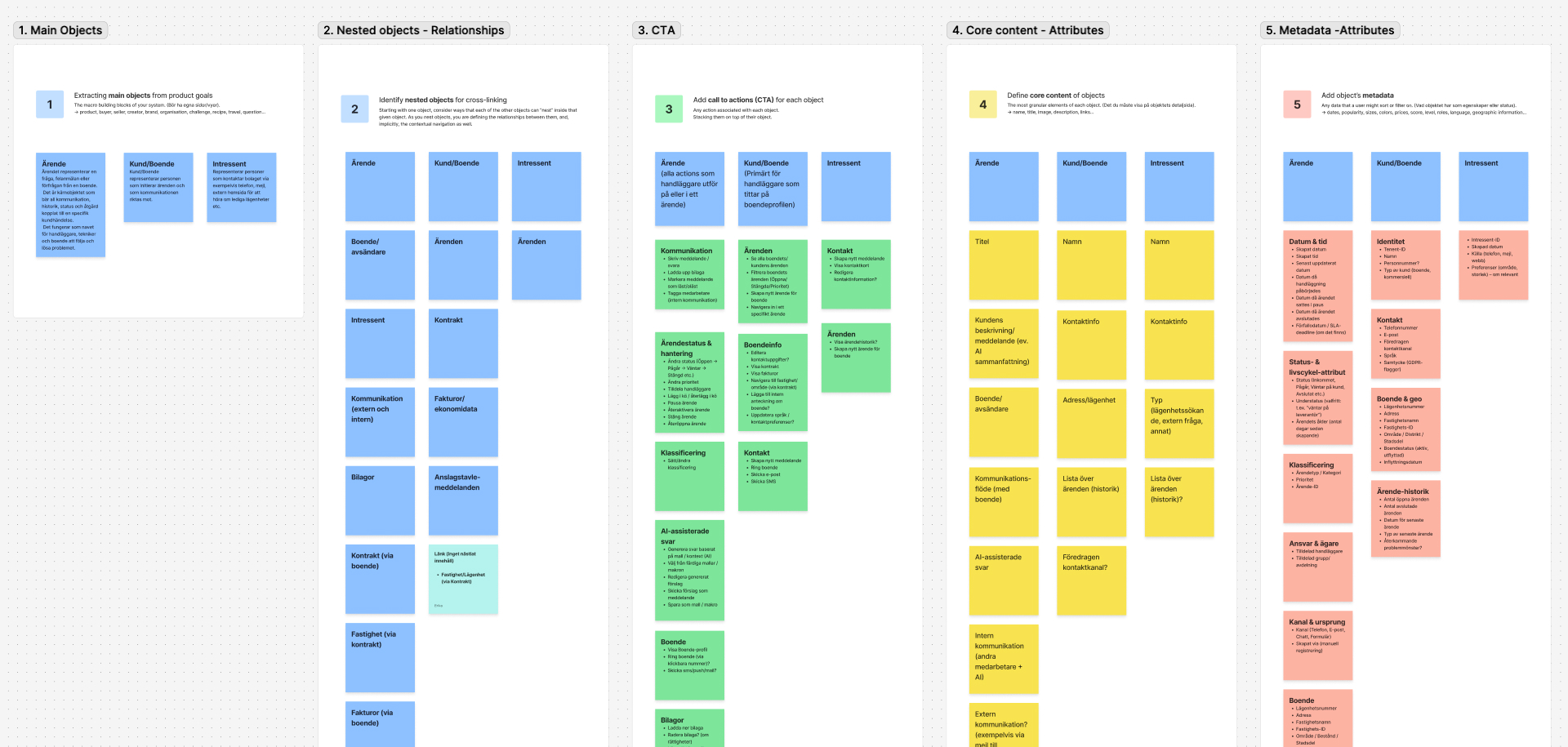
Before any screens, I mapped the system with OOUX in five steps: main objects, relationships, actions, core content and metadata. Three main objects came out of it – the case, the tenant and the prospective tenant – with contracts, properties, invoices, messages and attachments nested around them. AI was part of the map from the start: AI-assisted replies as an action on the case, and AI summaries as core content.
I iterated on the flows in Figma in close, daily collaboration with the CPO and PM. About four weeks after kickoff, I had a working prototype in Lovable that customers could click through – real flows instead of static screens. A few rounds of changes later, it was ready for customer sessions.
AI lives inside the case flow, not in a chatbot panel. Staff are busy handling cases, so help has to show up where the work happens – without them having to ask for it.
Test with a working prototype, not static designs. AI features are about behavior. Customers need to see the product suggest, summarize and group – not look at a picture of it.
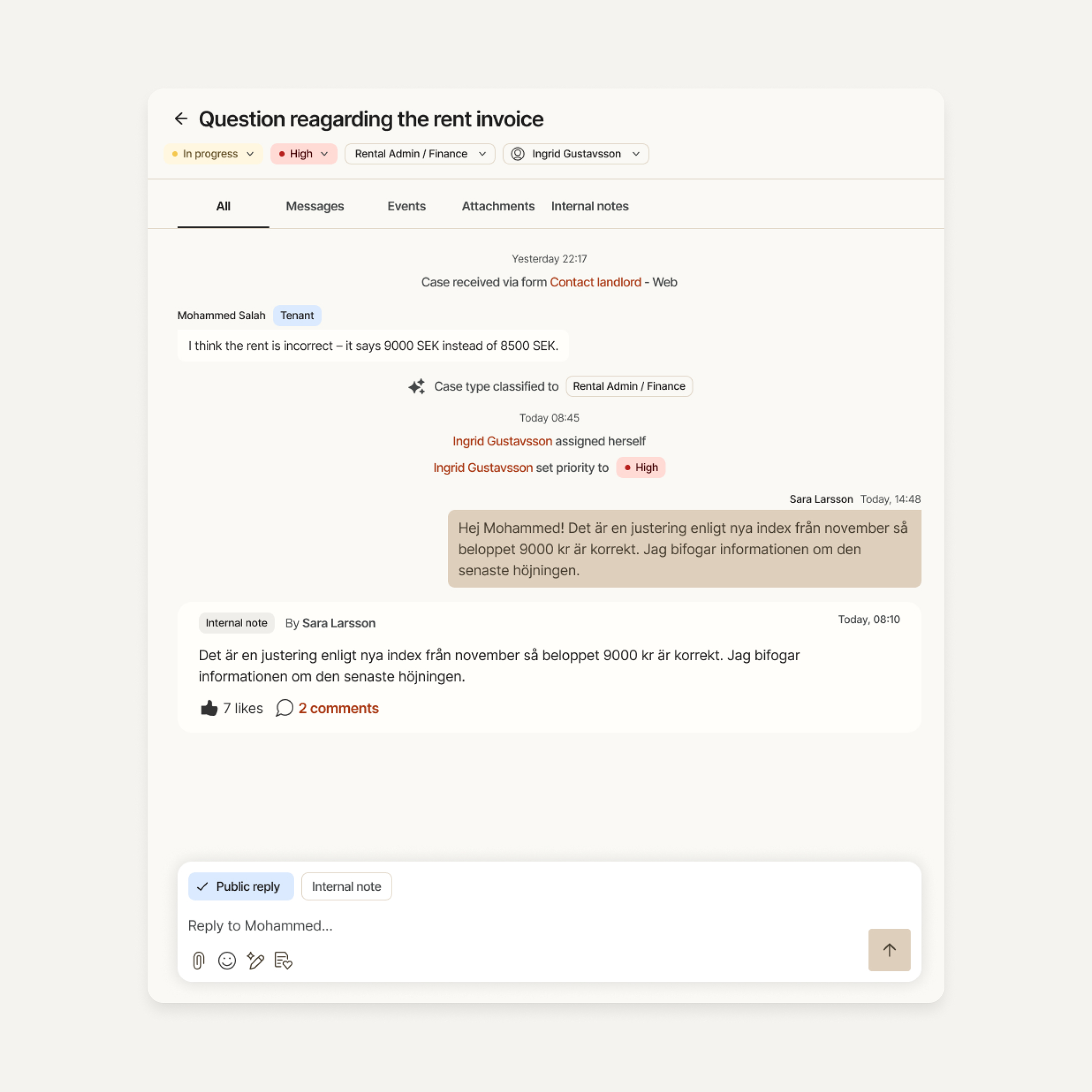
Incoming cases are classified by AI and routed to the right team and inbox. The classification shows in the case timeline, so staff can see what the AI did – and change it.
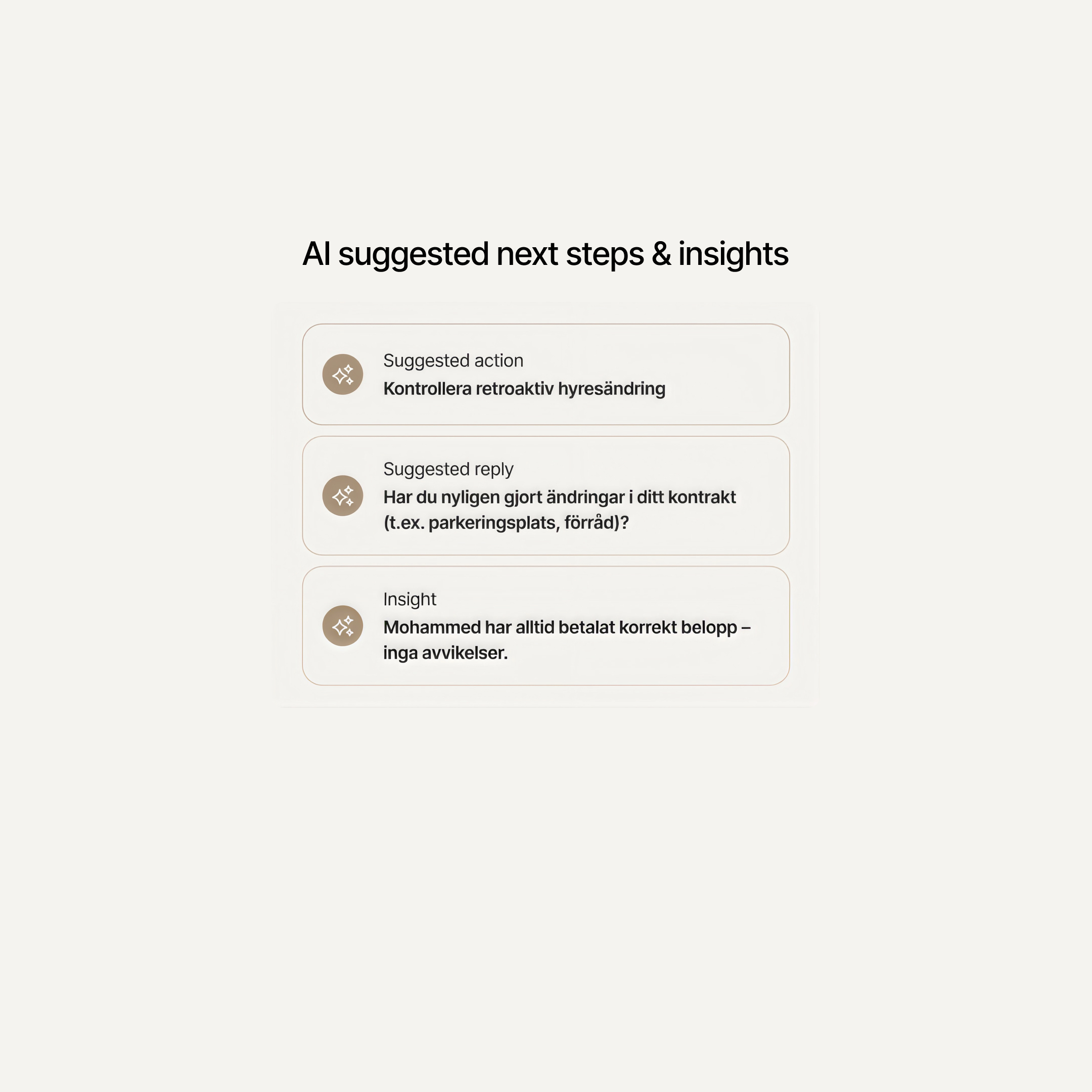
Each case opens with what the handler needs: an AI summary, the tenant's details and history, a suggested next action and a suggested reply. In the example, the AI points out that the tenant has always paid on time – which changes how you answer a question about a higher invoice.
The AI spots when many tenants ask about the same thing and suggests handling them together. Five cases, one answer.
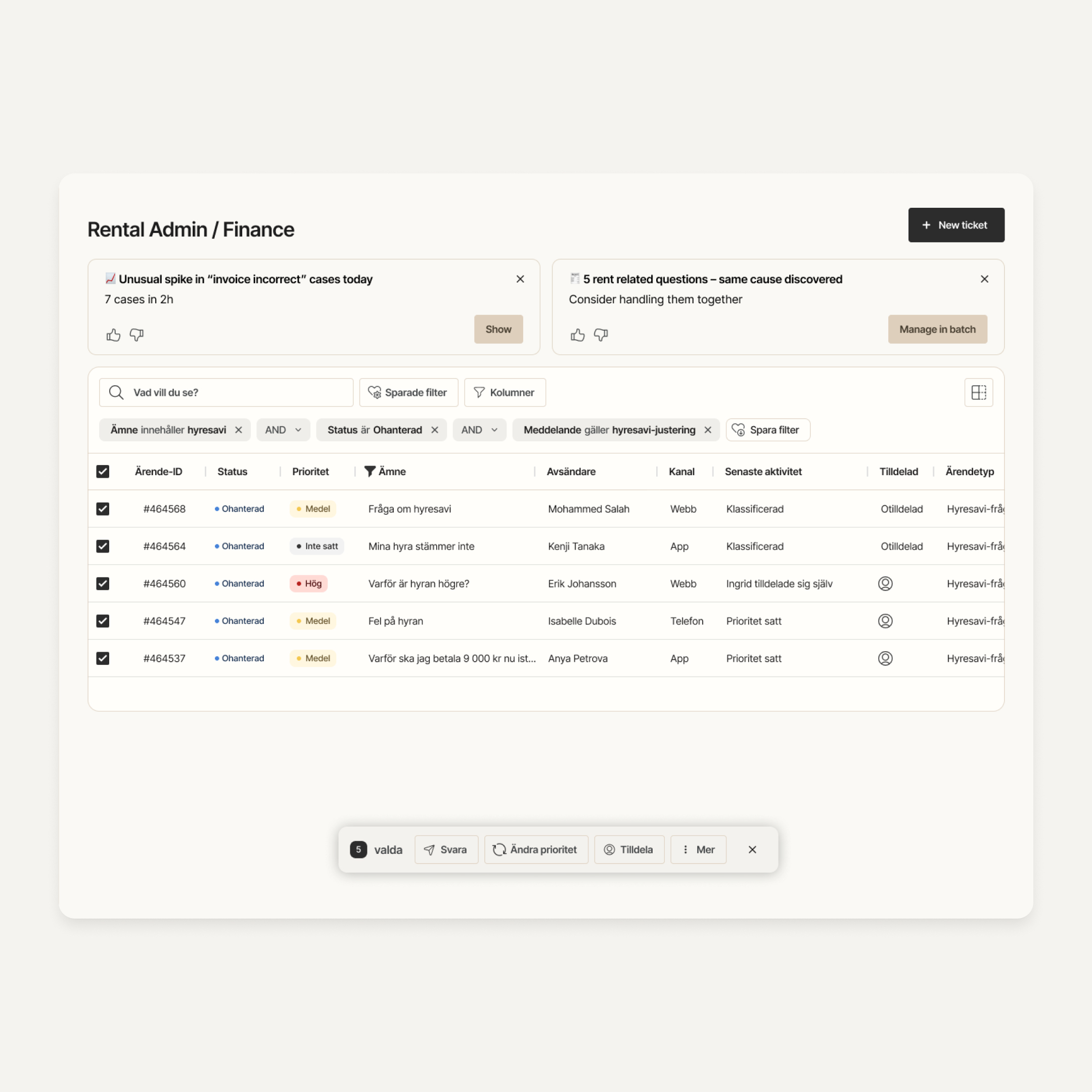
Trust by design. Every suggestion can be rated with a thumbs up or down, and every AI action is logged in the case history. Staff stay in control.
Avy tested the prototype with existing customers, and the response was positive. Avy decided to build the platform in spring 2026, and it has since launched as Avy Tenant Management. A version of the proactive suggestions concept is in the launched product as Davy's "AI action plan", which analyzes a case and suggests next steps.
According to Avy, more than half of general tenant requests can be resolved without manual handling. The design had to make that automation trustworthy for staff.
Designing AI-first is mostly about designing the moments in between: when the AI suggests, when it hands over to a human, and when a human corrects it. A working prototype let customers react to behavior, not just pixels – which made the validation far more honest.
Petter Arvidsson, CPO
Avy
Next case
You'll want to see this